

 Checkout
The Best Way To Care For Your Knitwear
Quality knitwear is a staple of all types of wardrobe, from countryside to office. When you find a piece that is comfortable, cosy, and soft, it’s tempting to reach for it over and over again. But, of course, the more you wear it, the more care it will need.
Everybody knows the risks that come with washing wool – you probably have your own story involving a much loved jumper that came out of the washing machine three sizes too small, despite having carefully followed instructions. The good news is that most wools do a lot of the work themselves. The fibres will naturally cleanse and repel dirt and odours due to their lanolin content. As a result, you don’t actually need to wash them very often.
Knitwear can be an investment, so we want to make sure it can last. In this blog, we’ve collated a few top tips for the best ways to wash, dry, and store your favourite cosy knitted layers.
Different Types of Knitwear Fabric
While all wool has the benefit of being durable and self-cleaning, some fabrics do require different care techniques.
Merino Wool
- Very warm but breathable
- Strong and durable
- Doesn’t tend to crease
- Naturally odour resistant so does not need cleaning very often
- Finer fibres than standard sheep’s wool, resulting in soft, non-itchy wool
Lambswool
- Most hypoallergenic wool fibre
- Comes from the first shearing of a lamb so fibres are very soft and fine
- Resilient, elastic and hard wearing
- Naturally water repellent
- Temperature regulating
Cashmere
- From Kashmir goats living in cold climates so naturally traps air for warmth
- Soft and downy
- Natural crimp allows long fibres to interlock, creating a fine and lightweight fabric
- Less durable and more delicate than sheep’s wool
Cleaning Your Knitwear
When to wash?
The high lanolin content found in wool will naturally self-remove dirt and odours from the fibres. This means that your knitwear can go longer between washes, therefore protecting the material. Spot cleaning using a special wool shampoo is a good option for small marks, rather than washing the whole jumper. You can also freshen your knitwear between wears by carefully hanging it outside on a fresh day, allowing the fibres to revive.
How to wash?
Best practice for washing knitwear is to avoid machine washing wherever possible, as the spinning motion and warm water can cause fibres to shrink. However, if the care instructions suggest that it is safe, you can use a gentle wool cycle on a cool temperature, preferably with a special wool detergent.
Most care labels will advise hand washing for knitwear. As with a machine, it is best to keep the water as cool as possible, letting the item soak for a while and moving it around as little as possible. Finally, if the care label specifically says “dry clean only”, it’s probably best to do as it says.
Drying Your Knitwear
The most important instructions to bear in mind when drying knitwear are the following:
- Never wring to dry
- Always dry flat
- Most importantly – NEVER put wool in a tumble dryer
Drying knitwear flat on an airer or laid on a towel will ensure the shape of the item is retained, as hanging wool when wet will cause the fibres to stretch. Remember, movement and heat can cause wool to shrink, so it’s best to handle knitwear as little as possible.

Storing Your Knitwear
The last way to care for your knitwear is to make sure it is stored correctly. It is always better to carefully fold wool items rather than hanging them in a wardrobe, as the hanger will cause the shoulders and neckline to stretch. Be sure not to store them anywhere dusty or leave them sitting for a long time, as this can attract moths to your precious knits.
Finally, don’t be scared to remove any bobbles that form. This is a natural process for wool fibres, particularly in high friction areas such as under arms or at the elbows and cuffs. High quality jumpers should stabilise and look good as new after the bobbles have been removed.
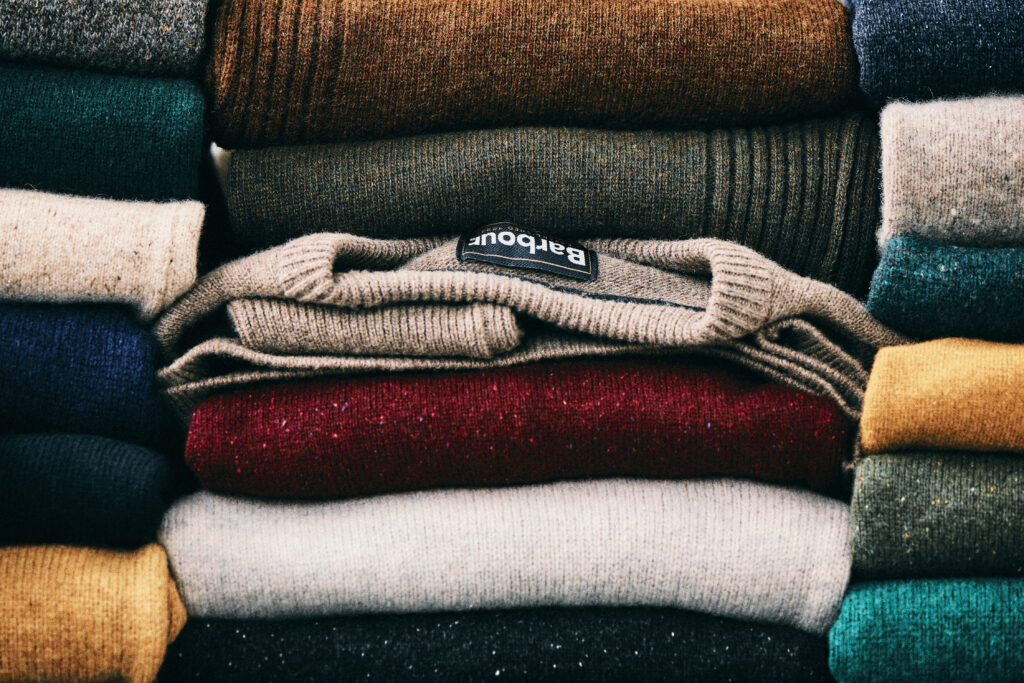
The most important message to take from this blog is that wool is much hardier than we give it credit for. These pieces are designed to last and are naturally resilient, so don’t let them hide away through fear of getting them dirty. Make sure you give those knits the love, care and wear they deserve!
Follow us on Instagram!
@OutdoorAndCountry